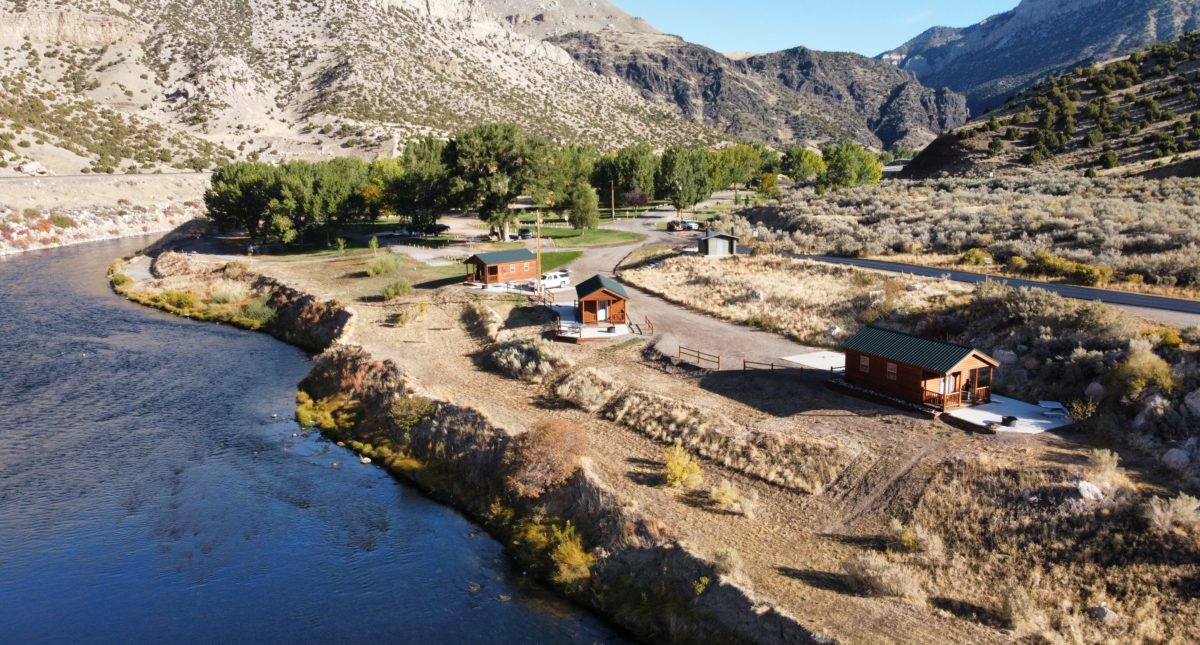
Campground in Wind River Canyon. Photo: Wind River Country
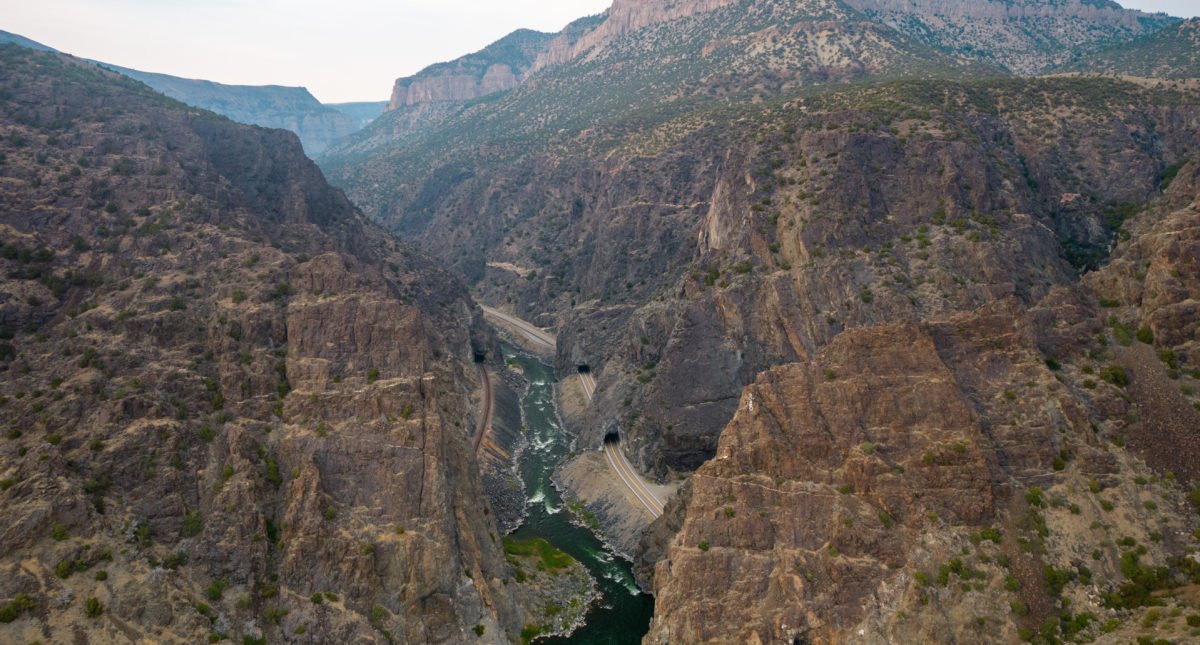
The entrance to Wind River Canyon, just a couple miles from Shoshoni. Photo: Wind River Country
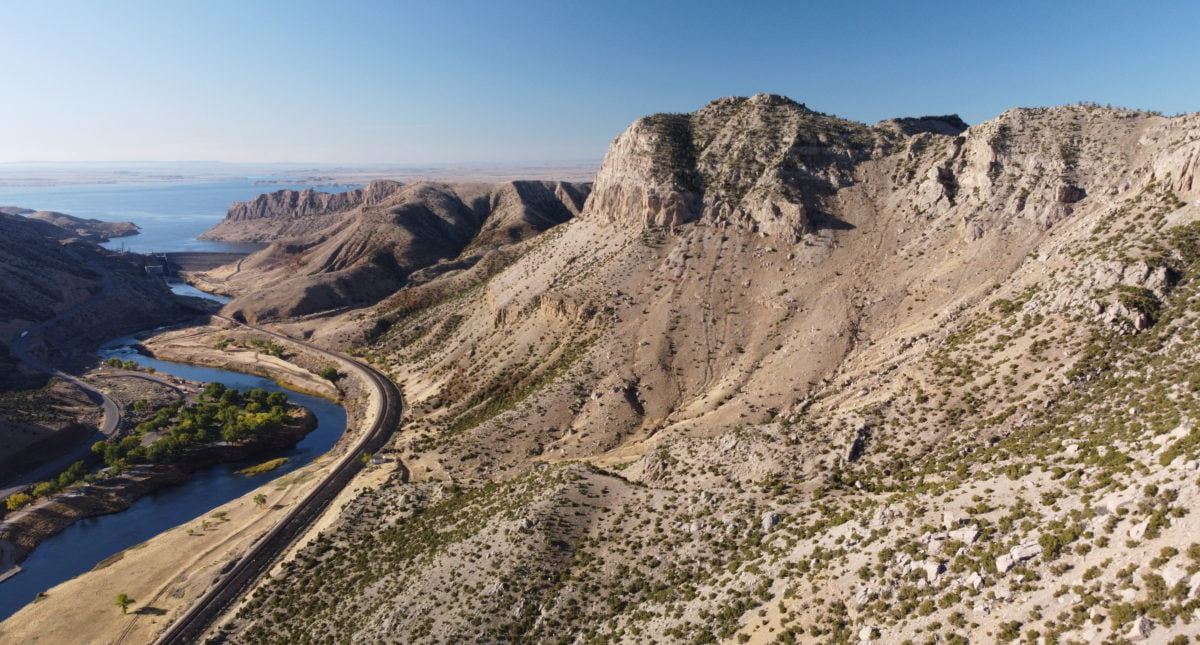
Looking down the canyon towards Boysen Reservoir. Photo: Wind River Country
A Geologic Masterpiece
The Wind River Canyon Scenic Byway begins in the town of Shoshoni and follows U.S. 20 north through Wind River Canyon and the Wind River Indian Reservation ending just south of Thermopolis. Without stopping, the total drive time is about 40 minutes. The 2,500 foot-deep canyon is a feast for the eyes with the oldest layers of rock dating back to the Precambrian era, over 2.5 billion years ago. Highlights include Boysen State Park, Owl Creek Mountains, the “Wedding of the Waters’ and the Bighorn River.
Explore the area surrounding the Wind River Canyon Scenic Byway and beyond on the Boysen Reservoir Driving Tour.
Boysen Dam
Asmus Boysen had a dream and a fortune. To power his dream, he built a dam using mule teams near where the first highway tunnel bores its way into Wind River Canyon. The year was 1908 and Boysen used the dam to produce 710 kilowatts of power for his copper and gold mine on nearby Copper Mountain. The dam produced the power well enough, but there was a problem. The lake that formed behind the dam flooded the railroad tracks. Mighty Burlington Northern sued Boysen to remove the dam.
Boysen lost the lawsuit, his fortune, his dam and his dream. The dam came down, though concrete abutments are still visible along the river. If you stop off to have lunch beneath the stately cottonwood trees or Upper or Lower Wind River Campgrounds, thank that dreaming Dutch immigrant Asmus Boysen for the shade. His dam created enough silt for the cottonwoods to get a toehold on the rocky shores of the river.
Rentals
COR Expeditions
300 Lincoln St
Lander, WY


Crooked Creek Guest Ranch
76 Fir Road, Union Pass
Dubois, WY


Cutthroat Fly Shop & Adventures
202 E. Ramshorn
Dubois, WY


Dubois Honda ATV
1510 Warm Springs Creek Rd
Dubois, WY
Dunoir Fishing Adventures
1405 Goodrich Dr.
Lander, WY
Full Throttle Powersports
1514 Warm Springs
Dubois, WY
Gannett Peak Sports
371 Main St.
Lander, WY


JH Rental
12 Spruce Court, Union Pass
Dubois, WY
Jim’s Aircraft Service
4700 Airport Road
Riverton, WY

KC Outdoors
116 E Ramshorn Street
Dubois, WY
Lander Fly Shop & Guide Service
305 Main St.
Lander, WY
Lander Llama Company
2024 Mortimore Lane
Lander, WY

Legacy Outfitters
Fort Washakie, WY
Louis Lake Lodge
1811 Louis Lake Rd
Lander, WY


NOLS (National Outdoor Leadership School)
284 Lincoln Street
Lander, WY
Priceless Car & Truck Rental
1305 Main St
Lander, WY
Priceless Car & Truck Rental
755 S. Federal
Riverton, WY
Ramshorn Llamas
351 Main St.
Dubois, WY
Rockin’ K Riding Stable, LLC
3850 Turquoise Dr.
Riverton, WY

Soda Peak Outfitters
PO Box 342
Dubois, WY
Sweetwater Fishing Expeditions
2939 Sinks Canyon Road
Lander, WY
Teton Fishing Co. LLC
5700 Hwy 27
Dubois, WY
The Bike Mill
109 Main St
Lander, WY
Thermopolis Fly Shop
415 Park St.
Thermopolis, WY
Western Adventures
1417 Warm Springs Dr.
Dubois, WY
Wild Iris Mountain Sports
166 Main Street
Lander, WY
Wind River Backcountry Outfitters
4 Goldeneye Drive
Dubois, WY
Wind River Climbing Guides
425 Popo Agie
Lander, WY
Wind River Fishing Adventures
Bull Lake
Fort Washakie, WY
Wind River Flyfitter
505 W. Ramshorn
Dubois, WY
Wind River Troutfitters
8116 Hwy 789
Lander, WY
Wyoming Country Outfitters
7696 US Hwy 287
Lander, WY
Fishing
Cutthroat Fly Shop & Adventures
202 E. Ramshorn
Dubois, WY
Dunoir Fishing Adventures
1405 Goodrich Dr.
Lander, WY
KC Outdoors
116 E Ramshorn Street
Dubois, WY
Lander Fly Shop & Guide Service
305 Main St.
Lander, WY
Legacy Outfitters
Fort Washakie, WY
Soda Peak Outfitters
PO Box 342
Dubois, WY
Sweetwater Fishing Expeditions
2939 Sinks Canyon Road
Lander, WY
Teton Fishing Co. LLC
5700 Hwy 27
Dubois, WY
Thermopolis Fly Shop
415 Park St.
Thermopolis, WY
Wind River Fishing Adventures
Bull Lake
Fort Washakie, WY
Wind River Flyfitter
505 W. Ramshorn
Dubois, WY
Wind River Troutfitters
8116 Hwy 789
Lander, WY
RV Parks & Campgrounds
B & K Shoreline Stop
14 Bass Lake Road
Shoshoni, WY
Boysen State Park
120 Boysen Dr.
Shoshoni, WY

Dexter Mill RV Park
3 Vajestic
Atlantic City, WY
Dickinson Park Public Campground
HWY 287
Lander,
Dubois Campgrounds
105 Kelsey
Dubois, WY
Dubois Wind River KOA
225 Welty St.
Dubois, WY
Jim Moss Arena
500 Eight Mile Road
Riverton, WY
Lander City Park Public Campground
405 Fremont St.
Lander, WY
Lava Mountain Lodge
3577 US Hwy 26 W.
Dubois, WY

Longhorn Ranch Lodge & RV
5810 E Highway 26
Dubois, WY
Louis Lake Lodge
1811 Louis Lake Rd
Lander, WY
Louis Lake Public Campground
1811 Louis Lake Rd
Lander, WY
Maverick RV Park & Campground
1104 N. Second Street
Lander, WY
Sinks Canyon State Park Public Campground
3079 Sinks Canyon Rd.
Lander, WY
Sleeping Bear RV Park & Campground
715 E Main
Lander, WY
Solitude RV Park
5628 U.S. 26
Dubois, WY
Stilson RV Sites
501 Hursh St
Riverton, WY
The Rock Shop Inn & Restaurant
4260 Hwy 28
Lander, WY
Twin Pines RV Park & Campground
7345 Hwy. 789
Lander, WY
Wild Willow Campground and Fishing
11124 Hwy 789
Riverton, WY
Wind Haven RV Resort
646 S. 1st St.
Dubois, WY
Wind River Basin Campground
23 Trout Creek Rd.
Fort Washakie, WY
Wind River RV Park
1618 E. Park Ave
Riverton, WY
Worthen Meadows Reservoir Campground
Forest Road 300
Lander, WY

Tours
3C Guiding
P.O. Box 493
Dubois, WY
Cutthroat Fly Shop & Adventures
202 E. Ramshorn
Dubois, WY
Dubois Fish Hatchery
5 Fish Hatchery Court
Dubois, WY
Dubois Museum: Wind River Historical Center
909 W. Ramshorn
Dubois, WY

Eagle Bronze Foundry
130 Poppy St.
Lander, WY
Eastern Shoshone Tribe Buffalo Tours
#14 North Fork Road
Fort Washakie, WY
Equitour, Ltd.
10 Stalnaker St
Dubois, WY
Fremont County Pioneer Museum
1443 W. Main St.
Lander, WY
National Bighorn Sheep Center
10 Bighorn Lane
Dubois, WY
Riverton Museum
700 E. Park Ave.
Riverton, WY
South Pass City State Historic Site
125 Main Street
South Pass, WY
Wind River Climbing Guides
425 Popo Agie
Lander, WY
Wind River Wild Horse Sanctuary
8616 Hwy 287
Lander, WY